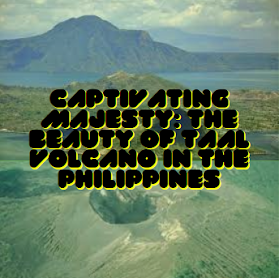
TAAL VOLCANO
Because of its tectonic position, the Philippines is a volcanically vulnerable area. On top of a variety of tiny plates, the island is sandwiched between two large tectonic plates that are divided by massive faults. Most volcanoes are found in the region between the Philippine and Eurasian tectonic plates. In the Philippines, large tsunamis frequently happen before volcanic activity. Though it’s possible that it wasn’t always the case, the Philippines has always been a hotspot for significant seismic activity in a small area. The fundamental reason for this is the nation’s fragile geographic location. The collection of islands is also susceptible to heavy rain, which can cause mudflows called Lahars in the region.
Taal Volcano, located in the Philippines, is one of the most famous and active volcanoes in the country. Here’s some information you might want to know about Taal Volcano:
- Location: Taal Volcano is situated on the island of Luzon, in the province of Batangas, approximately 70 kilometers (43 miles) south of Manila, the capital of the Philippines.
- Geographical Features: Taal Volcano is known for its unique geological characteristics. It’s actually a complex volcano within a caldera formed by previous eruptions. Within this caldera is a large lake, known as Taal Lake, which contains another smaller volcanic island known as Volcano Island. This makes Taal one of the few volcanoes in the world with a lake within its caldera, and a volcano within a lake on an island within a lake – a geographical rarity.
- Eruption History: Taal Volcano has had several eruptions throughout its history, with its most significant eruption occurring in 1911. This eruption claimed hundreds of lives and caused significant damage to nearby towns. Since then, Taal has experienced multiple eruptions, with varying degrees of severity.
- Volcanic Activity: Taal is considered one of the most active volcanoes in the Philippines, and it is closely monitored by government agencies to assess volcanic hazards and provide early warnings to nearby communities. It has had periods of unrest characterized by increased seismic activity, ground deformation, and changes in gas emissions.
- Tourism: Despite its potential dangers, Taal Volcano is a popular tourist destination. Visitors can take boat rides across Taal Lake to reach Volcano Island and hike to the crater rim. The hike offers breathtaking views of the volcanic landscape and the picturesque Taal Lake.
- Environmental Impact: The volcanic activity of Taal, while creating a unique landscape, can also pose environmental challenges. Eruptions can lead to ashfall and lahar (mudflow) hazards, affecting local communities and agriculture.
- Cultural Significance: Taal Volcano holds cultural significance for the Filipino people. It is often referred to as the “Volcano within a Lake within an Island” and is a symbol of the country’s natural beauty and geological diversity.
- Volcanic Monitoring: Due to the potential hazards associated with Taal Volcano, the Philippine Institute of Volcanology and Seismology (PHIVOLCS) closely monitors its activity and issues alerts and warnings to ensure the safety of nearby residents and visitors.
In summary, Taal Volcano is a unique and geologically fascinating natural wonder in the Philippines, attracting tourists and scientists alike. Its beauty is complemented by its geological complexity and the challenges it poses to the communities living in its vicinity.