
Tagalog Slangs: The Fun Side of Everyday Filipino Talk
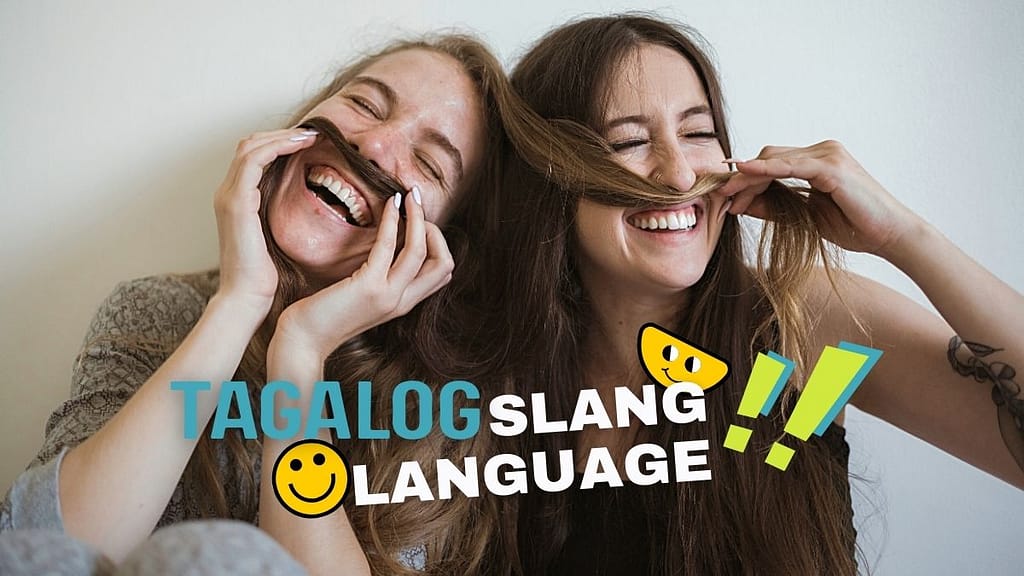
If you’ve ever listened to Filipinos talking casually, especially with friends, you’ll notice something right away — it doesn’t sound like the formal Tagalog you see in textbooks. It’s faster, more playful, sometimes mixed with English, and full of slang. That’s because Tagalog slang is a huge part of everyday conversation in the Philippines.
Tagalog slang makes conversations feel lighter and more natural. It’s what people use in group chats, memes, TikTok captions, and daily chika (gossip). Instead of saying “kaibigan” (friend), someone might say “bes” or “bhie.” Instead of “kumain ka na ba?” (have you eaten?), you might just hear “kain na?” It’s shorter, more relaxed, and less serious.
One thing that makes Tagalog slang interesting is how creative Filipinos are. Sometimes words are shortened. For example, “grabe”(too much) becomes “grabeee” (with extra letters for drama). “Seryoso? ( Seriously)” becomes “charot” when you want to say you’re just joking. If someone is being dramatic, you might hear “arte mo!” And when something is funny, people say “lakas maka-LOL” or just “HAHA.”
Another fun thing about Tagalog slang is the influence of English. Filipinos love mixing languages, and that’s where “Taglish” comes in. You’ll hear things like “Nakaka-stress naman!” or “Feeling ko talaga…” (I feel like) This mix makes conversations smoother because some thoughts are just easier to express in English. It’s not about being sosyal — (elite) it’s just natural.
Slang also changes depending on trends. Social media plays a huge role. Words like “awit” (used when something is disappointing), “sana all” (when you wish you had what someone else has), and “petmalu” (reverse of “malupet”, means extreme) became popular because of online culture. Young people especially love inventing new words or flipping syllables. It keeps the language exciting and alive.
But here’s the thing: slang is best used in casual settings. You wouldn’t use “charot”(kidding) in a formal job interview or write “awit” in a school research paper. Slang is for friends, classmates, siblings, and close coworkers. It builds connection. When someone uses the same slang as you, it feels like you’re part of the same circle.
At the end of the day, Tagalog slang shows how expressive Filipinos are. It reflects humor, emotion, creativity, and even social trends. Language isn’t just about grammar rules — it’s about how people really talk. And in the Philippines, people talk with personality.
So if you’re learning Tagalog, don’t just memorize formal words. Listen to conversations. Watch vlogs. Read comments online. That’s where the real flavor is. Because once you understand Tagalog slang, you don’t just understand the language — you understand the vibe.
You may visit our store for downloadable products:
- Short courses on Tagalog
2. E-book
A. Understanding Tagalog Grammar
C. Tagalog Verbs —Past, Present & Future
D. How to Speak Tagalog in 10 Days
3. Tagalog Worksheets
A. Musika ng Masa: Paano Nakakaapekto ang OPM sa Kultura?
B. Mga Katutubong Pilipino: Pagkilala at Paggalang sa Indigenous Groups
C. Pagkain ng Pilipino: Kwento ng Lasa at Kultura
Check out languages and courses for a lot more!
Learning Tagalog words for everyday talk isn’t just about trends — it’s about connecting with Filipino culture in a fun and natural way. The more you expose yourself to real conversations, the easier it becomes. The more you expose yourself to real conversations, the easier it becomes. Language is alive — and slang shows how it evolves.
Leave a Reply