
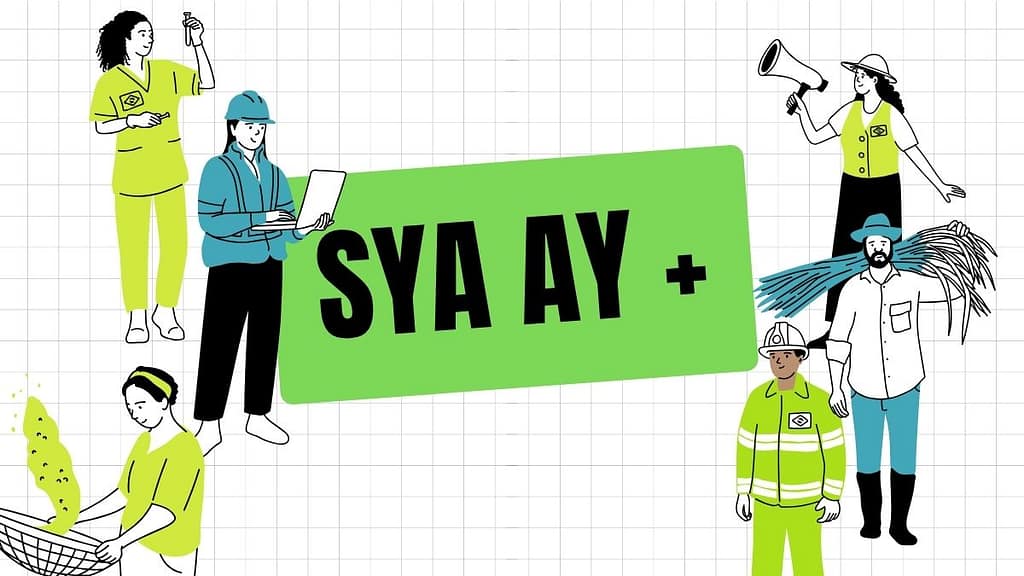
In this blog post, we’ll explore a new series on how to use “Siya ay” sentence pattern. But this time, it will be “Sya ay + noun”. We’ll also provide two sets of vocabulary (common nouns for people) that you can use right away.
In Filipino, “Siya” means he or she, while “ay” is a linking word used in formal sentence construction. When combined with a noun, the structure describes what a person is.
Formula:
Siya ay + noun
Examples:
- Siya ay guro. (He/She is a teacher.)
- Siya ay estudyante. (He/She is a student.)
- Siya ay doktor. (He/She is a doctor.)
This structure is incredibly useful for beginners because it introduces identity, professions, and roles in a straightforward way. Using the “Siya ay + noun” structure offers several important benefits, especially for beginners learning Filipino: First, it provides a simple and clear sentence pattern. Learners don’t need to worry about complex grammar rules—they can immediately form correct sentences by following one easy formula. Second, it helps build confidence early on. Being able to say sentences like “Siya ay guro” or “Siya ay estudyante” gives learners a sense of progress, which keeps them motivated. Third, it strengthens vocabulary retention. By repeatedly using nouns (like professions or roles), learners remember words more easily through practical application. This structure is useful for describing people, which is a common part of everyday conversation. Finally, it serves as a foundation for more advanced grammar. Once learners are comfortable with this pattern, they can expand into more complex sentence structures with ease. Here’s your first set of vocabulary focused on professions. These are ideal for beginner lessons:
Vocabulary Set 1: Common Professions (Person Nouns)
Here’s your first set of vocabulary focused on professions. These are ideal for beginner lessons:
- guro (teacher)
- doktor (doctor)
- nars (nurse)
- pulis (police officer)
- bumbero (firefighter)
- drayber (driver)
- magsasaka (farmer)
- mangingisda (fisherman)
- tindero / tindera (vendor)
- inhinyero (engineer)
- arkitekto (architect)
- abogado (lawyer)
- mekaniko (mechanic)
- pintor (painter)
- manunulat (writer)
Example sentences:
- Siya ay nars.
- Siya ay mekaniko.
- Siya ay manunulat.
Vocabulary Set 2: Everyday Roles and Identities
This second set focuses on general roles and identities people can relate to:
- estudyante (student)
- bata (child)
- kaibigan (friend)
- kapitbahay (neighbor)
- lider (leader)
- boluntaryo (volunteer)
- empleyado (employee)
- amo (boss/employer)
- kasambahay (house helper)
- atleta (athlete)
- artista (artist/actor)
- manlalaro (player)
- guwardiya (security guard)
- drayber (driver)
- turista (tourist)
Example sentences:
- Siya ay estudyante.
- Siya ay kaibigan.
- Siya ay turista.
In short, the “Siya ay + noun” structure is an easy but really helpful way to learn Filipino. It lets beginners make clear sentences right away while boosting their confidence and helping them remember important words. Since it focuses on people, jobs, and everyday roles, it’s easier to relate what you’re learning to real life. It also builds a solid base for learning more advanced sentence patterns later on. Whether you’re teaching or studying on your own, this structure is a practical and effective way to learn basic Filipino communication.



Leave a Reply