
Navigating the Nuances of Modals, Indirect Questions, and the Cultural Etiquette of Persuasion.
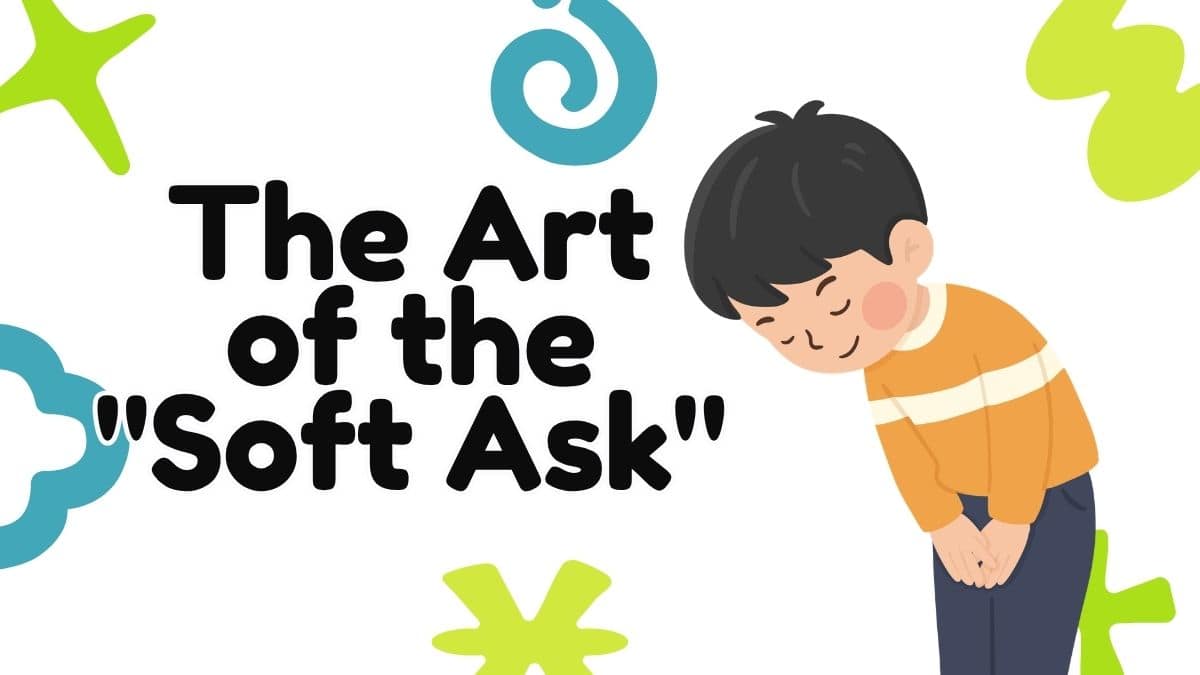
For many ESL learners, the most frustrating experiences in professional or social contexts don’t occur during formal grammar assessments; rather, they arise in the breakroom, at the grocery store, or during crucial meetings. You likely possess the precise vocabulary for what you need, yet when you speak, you may notice that people respond coldly or defensively. This often stems from an issue known as “Textbook Directness.” While many languages regard directness as a hallmark of honesty and efficiency, English-speaking cultures frequently associate a lack of linguistic cushioning with aggression or rudeness. To successfully navigate the English-speaking world in 2026, mastering the “Soft Ask”—a communication style that emphasizes the listener’s comfort and autonomy—is essential.
A common misconception in language learning is that simply inserting the word “please” into a sentence automatically makes it polite. In truth, saying “Give me that pen, please” remains a command adorned with a polite label. To genuinely convey professionalism, you’ll need to employ distancing language, such as “I was wondering if I could borrow your pen for a moment?” This structure provides the listener with a “way out,” which is fundamental to English etiquette. By framing a request as a possibility rather than a necessity, you allow the other person the freedom to decline without social guilt, ironically making them more inclined to agree.
To achieve a natural tone, it’s important to move beyond the imperative mood and embrace specific linguistic elements such as modal verbs and preambles. Modals like could and would serve as primary “softeners,” converting a statement from a reality to a possibility. Additionally, using the past continuous tense in a preamble—like “I was thinking” or “I was wondering”—implies that you’ve been contemplating the request for a while rather than making an impulsive demand. This is often paired with “minimizers” like just or a quick, which lessen the perceived burden of the request. For example, “Could I just grab a quick word with you?” feels significantly less intrusive than “I need to talk to you.”
Teaching politeness involves as much social psychology as it does grammar. Educators can assist students in transitioning from “demanding” to “requesting” by fostering a classroom environment that values nuance over mere correctness through these five techniques:
The Politeness Thermometer Visualization: Students often lack an internal compass for gauging where their speech falls on the formality spectrum, leading to unintentional rudeness. To address this, teachers can employ a “Politeness Thermometer” on the board, with one end labeled “Blunt/Direct” and the other “Softened/Indirect.” By taking a straightforward scenario, such as requesting a glass of water, and encouraging students to generate five different phrasings, they can visually understand why “Could I possibly have…” is “warmer” and more effective than “Give me…” This helps students internalize the hierarchy of social language.
The “Exit Strategy” Challenge: Politeness in English fundamentally involves providing the listener with an “exit strategy” or a graceful way to decline a request. Teachers can facilitate this by having students practice adding “No-Pressure” endings to their requests during pair work. For example, a student might say, “Could you assist me with this report? But no worries if you’re too busy!” This technique encourages learners to consider the listener’s feelings and time rather than focusing solely on their own immediate needs, fostering a more empathetic and native-like communication style.
The Negative Question Drill: Paradoxically, framing a question negatively often sounds more polite in English because it assumes the answer might be “no,” which alleviates pressure on the listener. Teachers can guide students through exercises where they convert direct requests into “I don’t suppose” structures. Although it may feel counterintuitive for an ESL learner to say, “I don’t suppose you could give me a ride, could you?”, mastering this structure is a hallmark of advanced fluency. It enables students to navigate high-stakes social situations without coming across as entitled or pushy.
The “Grumpy Neighbor” Role-Play: To put these skills to the test under pressure, students need a challenge that goes beyond simply being “nice” to their classmates. In this activity, the teacher assumes the role of a “Grumpy Neighbor” or a “Busy Boss” who is inclined to decline requests. Students must try to secure a favor using increasingly “softer” language. If a student is too direct, the teacher provides a cold rejection, prompting the student to adjust their tone, modal verbs, and preambles until the teacher ultimately concedes. This gamifies the nuances of tone and illustrates the real-world power of polite persuasion.
Intonation Shadowing and Pitch Mapping: Politeness is closely connected to musicality; a student can use the right words but still come across as demanding if their voice has a falling intonation. Teachers should use clips from contemporary media featuring characters navigating delicate social situations, allowing students to “shadow” the rising intonation employed at the end of polite requests. By mapping the pitch—demonstrating how a polite request “floats” upward, while a command “drops” at the end—students learn that the melody of their speech is just as crucial as the vocabulary they select.
Continuous practice is the key to mastery, utilize the given techiniques above and when given an opportunity try using it in real-life scenarios to further strengthen this skill. Mastering polite request helps you establish a more approachable and better image towards your colleagues and/or friends.
Leave a Reply