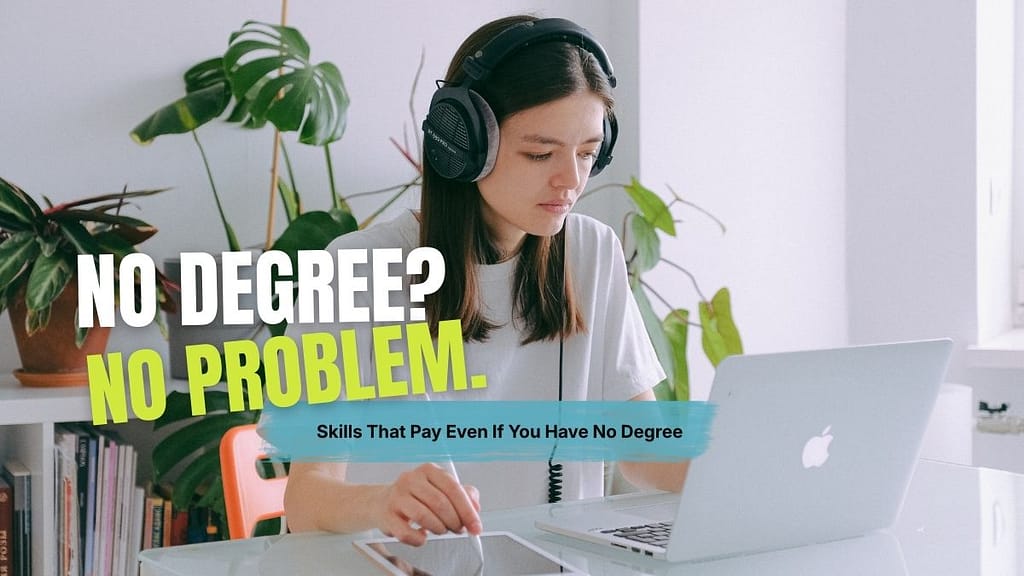
Let’s be honest — not everyone has a college degree. And even if you do, it doesn’t automatically guarantee income. In today’s digital economy, skills matter more than certificates. Clients don’t ask where you graduated. They ask, “Can you do the job?” If you’re trying to build income without a degree, without a corporate title, and maybe even without connections, this guide is for you.
Here are 3 practical, high-income skills that pay even if you have no degree — and simple action steps you can start today.
- Copywriting is one of the most powerful skills you can learn if you want to make money without a college degree. At its core, copywriting is simply selling with words. It’s the ability to write in a way that persuades someone to take action — to click, subscribe, download, book a call, or buy a product. And here’s the truth: businesses care more about results than credentials. No client is going to ask where you graduated from if your email campaign brought in $5,000 in sales. They care about conversions, not certificates. That’s why copywriting is one of the most practical, beginner-friendly, and high-income skills in today’s digital economy. Copywriting is not creative writing. It’s not about writing poems or fancy essays. It’s not about using deep vocabulary or sounding intellectual. Copywriting is strategic writing.
Starting is simple, but it requires discipline. First, study. Look at ads on Facebook or Instagram. Read landing pages for online courses. Subscribe to marketing emails. Instead of scrolling mindlessly, analyze why certain messages grab your attention. Second, practice daily. Rewrite ads in your own words. Create fake product scenarios and write sales descriptions for them. Practice headlines — because headlines are what get clicks. Third, build samples. Even if you don’t have clients yet, create 3–5 mock projects to show your style and structure. A simple Google Doc portfolio is enough to begin. Last, reach out. Message small business owners, online coaches, or content creators. Offer to write one piece for free in exchange for a testimonial. Once you get proof of results, you can start charging.
2. Sales is uncomfortable — and that’s exactly why it pays. Sales makes most people uncomfortable. Talking about money. Handling objections. Following up. Asking for the payment. Closing the deal. It feels awkward. It feels intimidating. It feels risky. And that’s exactly why sales is one of the highest-income skills you can learn — even if you have no degree, no fancy background, and no corporate experience. Because most people avoid it. When you develop the ability to help a business close deals, you instantly become valuable. Not “nice to have.” Not optional and it is essential. These days online economy, revenue drives everything. If you can directly impact revenue, you don’t need a diploma to justify your worth. You are directly connected to money. And the market pays people who are close to the money. Unlike traditional careers, sales is performance-based. Clients care about:
How well you handle prospects?
How many deals you close?
How much revenue you bring in?
They rarely ask: “Where did you graduate?” Because results speak louder than credentials. This is why remote sales jobs, commission-based roles, and online closing opportunities are growing rapidly. Businesses would rather pay someone 10–20% commission than let potential customers walk away. You don’t need a business diploma. You need: First, confidence. It is not the loud confidence. Not aggressive energy. Calm confidence. The ability to say: “This can help you. Let’s talk about it.” Confidence comes from practice. From hearing “no” and not taking it personally. From understanding that rejection is part of the process . Next, communication skills. Sales is not about talking nonstop. It’s about listening. The best closers:
- Ask the right questions
- Clarify pain points
- Reflect back what they hear
- Guide conversations naturally.
If you can have genuine conversations, you can learn sales. Last, emotional intelligence. This is the secret most people ignore. Emotional intelligence means:
- Reading tone and hesitation
- Understanding fear around money
- Responding calmly to objections
- Knowing when to push — and when to pause
High-ticket selling especially requires empathy. People invest in solutions when they feel understood, not pressured. If you can guide conversations naturally and move people toward purchasing, you can earn from home — no degree needed.
3. Video editing—the creator economy skill. We are living in the attention economy. Attention is the new currency. Views turn into followers. Followers turn into trust. Trust turns into sales. And behind almost every viral video, engaging reel, or high-converting YouTube channel is one powerful skill — video editing. Video editing is one of the most practical high-income skills you can learn today, especially if you don’t have a degree. In the world of short-form content, digital products, and online businesses, creators need editors more than ever. And they are willing to pay for it. Platforms like YouTube, TikTok, and Instagram are growing fast. Businesses and personal brands rely on video content to stay visible. But here’s what most people don’t realize: filming content is only half the work. Editing is what transforms raw clips into engaging stories.A good editor can:
- Cut boring parts
- Add captions and hooks
- Improve pacing
- Insert sound effects
- Highlight key moments
All of this increases watch time and engagement — which leads to more growth and revenue. That’s why creators outsource editing. As a beginner video editor, you can start by offering:
- Short-form reel editing
- YouTube video editing
- Podcast clip repurposing
- Captioned social media videos
Many editors charge per video or monthly packages. Even simple short-form edits can earn $50 to $150 each. With consistent clients, that adds up quickly. The best part? Clients care about your portfolio — not your diploma. One reason video editing is beginner-friendly is the low barrier to entry. You can start using:
- CapCut
- Canva Video Editor
You only need a computer, basic software knowledge, and internet access. What matters most is practice. Study viral videos. Observe the hooks in the first three seconds. Notice how subtitles are styled. Pay attention to pacing. Then recreate that style with your own practice footage. In the attention economy, speed and clarity win. Focus on creators under 10,000 followers. They are growing and more likely to need help. Once you master consistency, you can scale your services or increase pricing. If you sell on Payhip, you can package your workflow into downloadable products. This turns your time-based service into passive income. In the attention economy, content is power. And editing is what shapes content into influence. You don’t need a film degree. You don’t need expensive tools. You need skill, creativity, and consistency. Master video editing, and you position yourself at the center of the creator economy — where attention turns into income.
In conclusion, you don’t need a degree — you need skills that solve real business problems. Copywriting, sales, and video editing all connect directly to revenue, which is why they pay. If you want to start practically: (1) Choose one skill and commit to it for at least 3–6 months, (2) Build a small portfolio instead of waiting to feel ready, and (3) Offer your service first, then turn your knowledge into digital products for scale. Focus on results, stay consistent, and improve through action. The market rewards value — and these skills let you create it.
Leave a Reply