

Small Details, Big Scores: Practice IELTS Listening
In the IELTS Listening test, note, table, and form completion questions are common tasks that check how well you can understand specific details in spoken English. These questions usually require you to fill in missing information such as names, dates, prices, numbers, or short phrases while listening to a conversation or lecture. Learning how to approach these tasks can help you answer more accurately and improve your overall listening score.
The first important step is to read the instructions carefully before the audio begins. IELTS often includes a word limit such as “Write no more than two words and/or a number.” This instruction is very important because writing more than the allowed number of words will make your answer incorrect, even if the information is right. Take a few seconds to look at the form or table and try to predict the type of information needed. For example, if the blank is next to “Price,” you know the answer will likely be a number or an amount of money.
Another helpful strategy is to follow the order of the questions. In IELTS listening, the answers usually appear in the same order as the information in the recording. As you listen, focus on keywords that match the notes or table headings. However, be aware that the speaker may use synonyms or paraphrased expressions instead of the exact words written in the question.
Finally, remember to listen for details and write quickly but clearly. If you miss one answer, do not panic—move on and keep listening for the next one. Practicing this type of question regularly will improve your concentration and help you become more confident during the test.
Let’s have a try!
Audio 1:
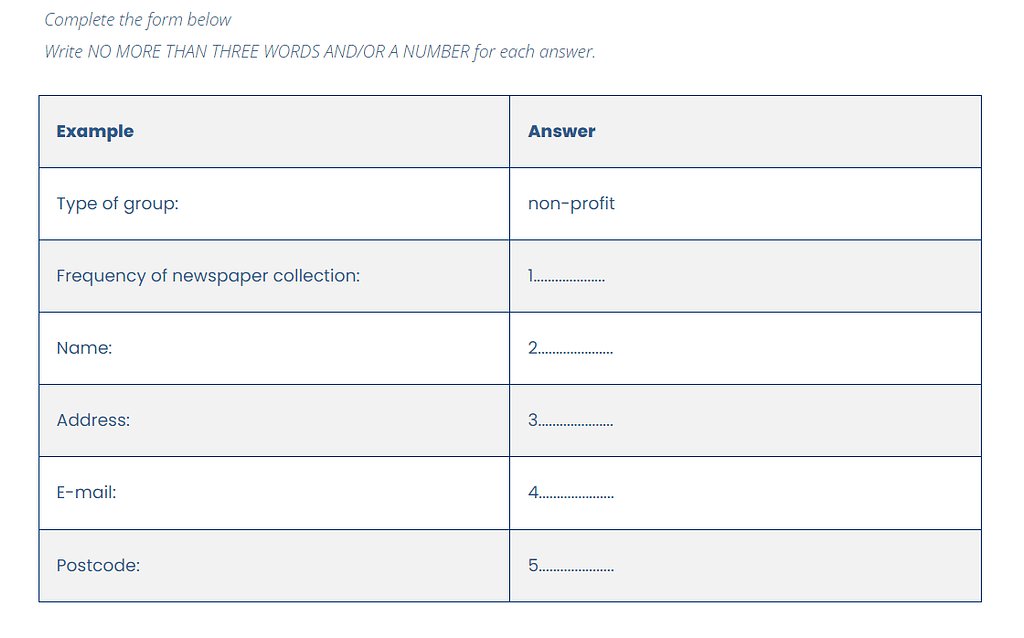
Answer Key:
Practicing IELTS listening tests is one of the best ways to prepare for the exam. Practice tests help learners become familiar with the different question types, such as multiple choice, note completion, and table completion. By completing regular listening exercises, students can improve their ability to catch important details like numbers, dates, names, and key ideas. Practice tests also train learners to manage their time and stay focused while listening to recordings only once. Over time, students will develop stronger listening skills, better concentration, and greater confidence. Consistent practice allows test-takers to understand accents, recognize keywords, and perform more effectively on the actual IELTS Listening exam.
Sign up here and starts your IELTS review with us!




Leave a Reply