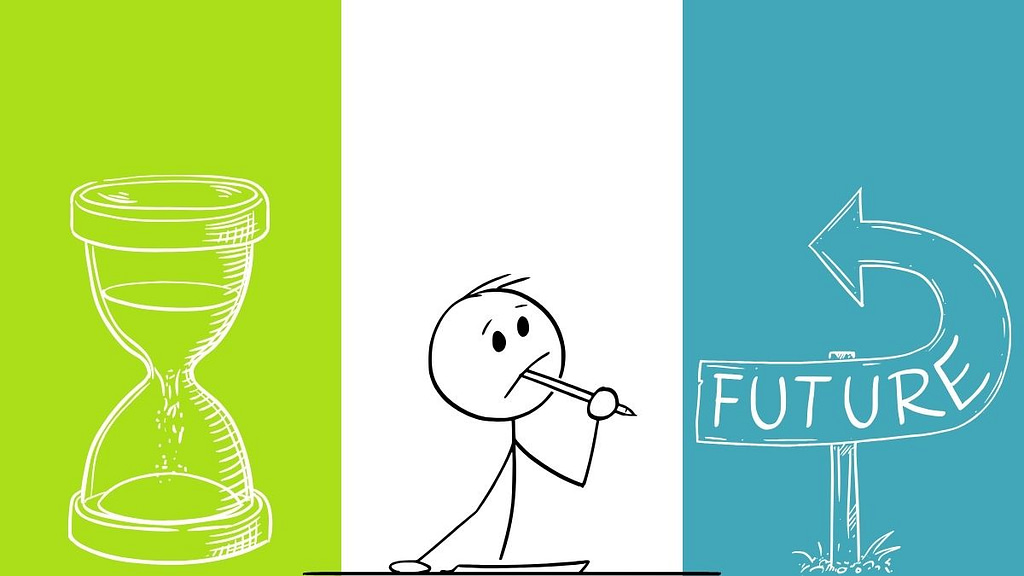
If you’re reading this, you’ve probably experienced the frustration of feeling like a “prisoner of the present.” You possess a sharp mind, a successful career, and a wealth of experiences, yet when speaking English, you often feel confined. You may wish to articulate a complex project you completed last month or a dream you’ve pursued for years, but you find yourself tangled in the “Simple Present” trap.
Let’s face it: English verb tenses can be overwhelming. They do more than indicate when something occurred; they convey how the speaker feels about the timing. In many languages, one or two tenses suffice, while English boasts twelve. This issue isn’t solely about vocabulary; it’s a structural challenge. You aren’t “bad” at English; you’re merely trying to navigate a twelve-dimensional landscape with a three-dimensional tool.
The key to overcoming this barrier isn’t more reading—it’s transforming how your brain interprets the “logic” of time. Many adult learners grapple with this because they attempt to translate concepts from their native language into English structures. By the time you’ve figured out the subject, the auxiliary verb, and the past participle, the conversation has progressed without you. To speak fluently, you need to shift from “calculating” to “reacting.” For adult learners, the challenges with tenses stem from three specific factors:
First is the logic of aspect, in English, “tense” (Past, Present, Future) is only part of the equation. The other part is “aspect” (Simple, Continuous, Perfect, Perfect Continuous). Aspect defines the texture of time. Is the action a single “dot” in the past? Or is it a “line” that stretches into the present? Most learners grasp the “when” correctly but miss the “texture.” Another is the, overload in “auxiliary verbs”. English heavily relies on “helper” verbs like do, does, did, have, has, had, will, and be. Remembering which helper corresponds to which tense while simultaneously recalling the irregular forms of the main verb (such as eat vs. ate vs. eaten) imposes a significant cognitive burden, often resulting in “freezing.” Lastly is, “the linguistic ego”, as adults, we are accustomed to being seen as intelligent. When you make a “childish” mistake—such as saying “I have go” instead of “I have gone”—it can dent your confidence. This fear of error actually hampers your learning, preventing you from practicing the very tenses you find challenging.
Before we explore solutions, we should address a common issue in adult language acquisition: The Zero-Tense Trap. Have you ever found yourself saying “Yesterday I go to the office” or “Next week I see him”? Even though you know the past and future forms, your brain often defaults to the base verb. This isn’t due to forgetting grammar; it’s a cognitive “survival mode.” When your brain is overwhelmed with vocabulary, pronunciation, and the pressure of a real-time conversation, it tries to conserve energy. It discards the “expensive” parts of English—the conjugations—and retains only the “cheap” parts—the base verbs. You depend on context (like the word “Yesterday”) to perform the heavy lifting that the verb should handle.
The risk of the Zero-Tense Trap is that it limits your fluency. While people may understand you, you lose the ability to convey nuance. There’s a significant difference among “I work” (my habit), “I am working” (right now), and “I have worked” (my experience). To escape the trap, you must convince your brain that these conjugations aren’t “extra baggage”—they are the driving force of the sentence.
Some of the ways we can address your tense mastery is by what we call the “tense stacking” a narrative drill. Rather than practicing one tense at a time, focus on how they interact. A “Tense Stack” drill involves taking a simple fact and expanding it across the timeline. This helps your brain understand the connections between the “dots” and “lines” of time.
- Step 1: State a current fact (e.g., I work in marketing).
- Step 2: State the starting point (e.g., I started this job in 2022).
- Step 3: Connect them (e.g., I have been working in marketing for four years).
- Step 4: Add a “before” layer (e.g., Before this, I had worked in sales).
By stacking these sentences, you learn that tenses are not isolated rules; they form a sequence of events that narrate a complete story. To create your own story using this method, refer to our Interactive Tense Stacking Lesson Guide for step-by-step narrative construction.
Another is the “temporal trigger reflex drill”. In English, certain words act as “magnets” for specific tenses. Words like “Already,” “Yet,” and “Since” typically lead you toward the Perfect tenses, while “Yesterday” and “Ago” direct you to the Past Simple. The drill consists of a partner (or an AI) calling out a trigger word, and you must respond with a complete sentence within three seconds.
- Trigger: “Twice this week.” -> Response: “I have exercised twice this week.”
- Trigger: “In 2015.” -> Response: “I graduated in 2015.”
This eliminates the “translation” step and builds a direct reflex between the time marker and the verb form. Enhance your reflexes with our Time Marker Flashcard and Audio Drill Set designed for rapid-response training. Another technique is the “aspect visualization”, instead of memorizing formulas like Subject + Have + Past Participle, visualize the shape of the tense. You may think of the Dot (Simple): A quick, completed action, the line (Continuous): An ongoing process. and, the bridge (Perfect): An action that begins in the past and connects to the present.
When you want to speak, don’t focus on words; think about the shape. If you want to describe a “bridge” between your past experiences and current life, your brain will instinctively reach for the “have/has” structure. Visualize the grammar with our Interactive Aspect Shape Gallery, which uses animations to illustrate how time flows in English.
You may also use the “contrastive analysis” drill, confusion often arises between two similar tenses, like the Past Simple and the Present Perfect. The best way to resolve this is through “Contrast Drills.” Create a table of “Specific vs. General.”
- Specific (Past Simple): I visited Paris in 2018.
- General (Present Perfect): I have visited Paris.
By practicing these two sentences side by side, you train your brain to identify the “Specific Time” boundary. If the time is defined (2018), use the Past. If it’s undefined (my life), opt for the Perfect. Practice the ‘Specific vs. General’ distinction with our Professional Interview Simulation Activity, where you choose the tense based on the question.
Lastly, we have the “muscle memory” verb sprint. Adults often find irregular verbs (bought, caught, thought) challenging. These require pure muscle memory. A “Verb Sprint” involves rapidly conjugating one irregular verb through every tense.
- “I buy, I am buying, I bought, I have bought, I will buy.”
Do this while walking, driving, or washing dishes. The aim is to make the sound of the correct conjugation so familiar that a mistake “sounds” wrong, even if you can’t recall the specific rule at that moment. To truly escape the Zero-Tense Trap, you need to practice under pressure. Your brain only learns to use these complex forms if it understands that the “base verb” isn’t sufficient.
Try the “No-Context Challenge.” Attempt to narrate a story without using any time markers (like “yesterday,” “before,” or “soon”). When you strip away context clues, your verbs must be accurate for the listener to comprehend the timeline. If you say “I visit Rome,” the listener won’t know if you are referring to a plan or a memory. This forced dependency on the verb form is the quickest way to build the mental muscles needed for real-world fluency.
Additionally, focus on the Auxiliary First. Most adult errors occur because the speaker forgets the “helper” verb (have, will, am). In your drills, practice stating just the helper and the subject first. “I have… I will… I was…” Once the auxiliary is established, your brain will naturally follow with the correct verb ending. It’s like laying down tracks for a train; once the tracks are set, the train knows precisely where to go.
The purpose of these drills isn’t to turn you into a walking grammar reference. Instead, the goal is to make grammar “invisible.” As a child learning your first language, you didn’t study charts; you felt the intent behind the words.
As an adult, you can utilize these drills to bridge the gap between your high-level thoughts and your English expression. Embrace the “twelve tenses.” View them as twelve different shades on your palette. With consistent practice of these drills, your communication will become more expressive and precise. You possess a wealth of stories within you—don’t let the present tense be the sole way to share them.
Leave a Reply