The Question Key: Empowering Struggling ESL Students to Master Yes/No Interrogatives
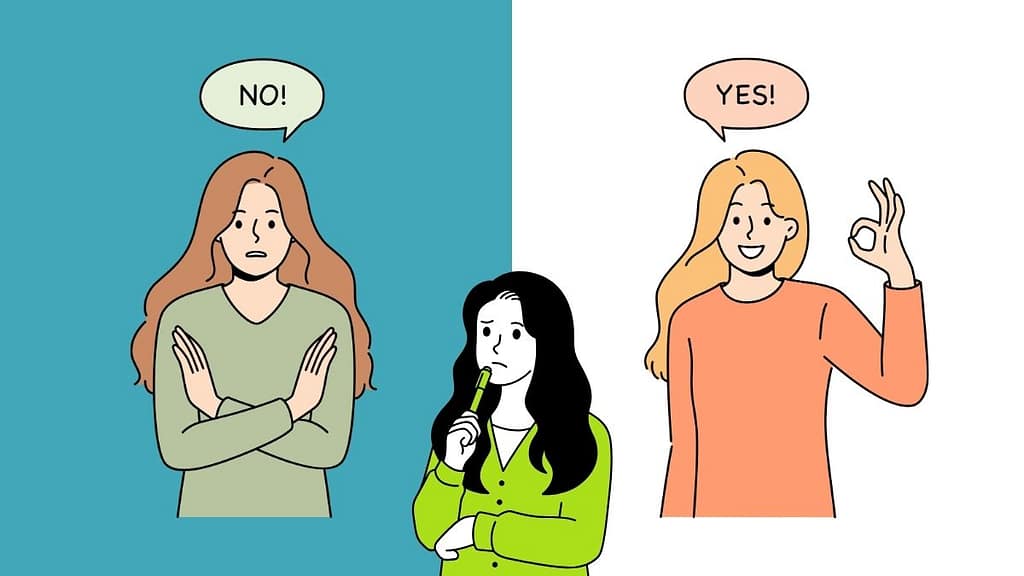
Yes/no questions—particularly those that begin with “Do you…?” or “Are you…?”—are typically introduced during the initial weeks of an ESL curriculum. At a glance, they appear to be the simplest means of starting communication. However, for many learners facing challenges, these structures can feel like a linguistic obstacle course. Transitioning from a declarative statement (“You like coffee”) to an interrogative one (“Do you like coffee?”) involves intricate grammatical shifts that may leave students feeling overwhelmed.
As educators, our mission is to bridge the gap between knowing the rules and using the language effectively. This comprehensive guide offers the pedagogical insights and interactive tools necessary to help your students confidently master yes/no questions. To effectively assist struggling learners, we must first grasp the cognitive and linguistic challenges they face. Here are the key obstacles:
Unlike many languages that form questions simply by altering intonation, English requires Subject-Auxiliary Inversion. When there’s no auxiliary verb like “be” or “can,” English necessitates the addition of “do,” “does,” or “did.” For learners, incorporating a word that wasn’t part of their original thought can be a significant mental challenge.
Another is the “Third-Person Singular Trap” . The “s” in the third-person singular (He likes) often vanishes in the question form (Does he like…?). Learners often produce “Does he likes…?” as their brains struggle to manage both “does” and the “s” simultaneously.
Teachers also frequently struggle with short answers, they often receive a straightforward “Yes” or “No.” While technically accurate, native speakers rarely stop there. Mastering short answers (e.g., “Yes, I do” or “No, she isn’t”) is a crucial indicator of fluency.
Lastly, the interference of the student’s L1. Depending on a student’s native language, they might be prone to specific errors, such as adopting a verb-subject order (“Like you pizza?”) or using statement-plus-particle structures.
To help students overcome these challenges, we need more than just worksheets. Here are five effective pedagogical techniques:
Visual Scaffolding with “The Verb Switch”: Utilize colored index cards. Write “You” on a blue card and “Are” on a red card. Physically switch their positions to illustrate the transformation from statement to question. For “Do-Support,” use a “Hidden Do” card placed behind the subject to reveal when necessary.
The “Short Answer” Echo Technique: Encourage students to “echo” the first word of the question. If the teacher starts with “Do you…?”, the student responds with the echoed word: “Yes, I do.”
Intonation Mapping: Use your arm to trace the “pitch contour” in the air. For yes/no questions, the pitch should rise at the end. Have students “hum” the question rhythm before adding words to lessen cognitive load.
Error Categorization (The “Yellow Card” Method): Rather than interrupting, employ visual cues. Create small cards labeled “Auxiliary?” or “Word Order?” and point to them when a mistake occurs, prompting immediate self-correction.
Concept Checking Questions (CCQs): Use yes/no questions to assess understanding of the rules. Instead of asking “Do you understand?”, ask “In the question ‘Does he like tea?’, do we put an ‘s’ on ‘like’?”
These activities shift the lesson from theory to practice, maintaining high energy and reducing anxiety.
The “Whose Bag Is It?” Mystery: In this engaging activity, the teacher gathers one small, non-identifying personal item—such as a uniquely colored pen, a keychain, or a distinctive coin—from each student and places them into a “Mystery Box.” The teacher then pulls out an item and asks the class, “Is this Maria’s?” or “Does this belong to Jose?” Students must practice their short answers by responding with “No, it isn’t” or “No, it doesn’t” until the correct owner is identified. This hands-on activity effectively drills the third-person singular “is/does” distinction in a low-pressure environment where students are genuinely curious about the objects revealed.
Yes/No Speed Dating: This dynamic fluency builder requires students to sit in two long rows facing each other. Each student receives a small slip of paper with three to five “Do you…?” questions, such as “Do you like spicy food?” or “Do you have a pet?” Upon the teacher’s signal, students have sixty seconds to interview the person across from them using only yes/no questions. When the timer sounds, one row shifts down by one seat, providing everyone with a new partner and a fresh opportunity to practice the grammatical structures. To increase the challenge, consider implementing a “Taboo” rule prohibiting the use of “Yes” or “No,” prompting students to use complete short answers like “I do” or “I am.”
The “Find a Secret” Interview: This activity focuses on deducing a specific “target.” Each student is assigned a “secret trait” noted on a card, such as “I don’t like chocolate” or “I play the guitar.” Students then circulate around the room, interviewing their peers to find the person who matches a specific secret given by the teacher. Since they can only ask yes/no questions, they must think strategically to narrow down their search. This encourages struggling learners to move beyond rote repetition and genuinely use the “Do you…?” structure to achieve a specific communicative goal.
Classroom “Twenty Questions” (Visual Edition): This classic game is tailored for ESL learners using visual aids to reduce cognitive load. The teacher attaches a picture of a common object, like an apple or a bicycle, to a student’s back, ensuring they cannot see it. The student then walks around the room, asking classmates yes/no questions to figure out what they “are.” To support struggling learners, the teacher can provide a “Question Menu” on the whiteboard with sentence starters like “Am I a…?” “Can you eat me?” or “Do I have wheels?” This scaffolding helps students focus on the inverted word order without getting stuck on vocabulary.
The “Logic Grid” Puzzle: For students who prefer a quieter, more analytical approach, the Logic Grid activity blends listening comprehension with grammatical accuracy. The teacher supplies a 3×3 grid with names on one axis and hobbies or items on the other. The teacher then reads a series of statements in question-and-answer form, such as “Does Sarah like tea? Yes, she does,” or “Is Mark a doctor? No, he isn’t.” Students must use these clues to mark an ‘X’ or an ‘O’ in the respective boxes on their grid. This method is particularly effective for helping students recognize the relationship between the auxiliary verb used in the question and the one used in the response.
Mastering yes/no questions is a journey, not a sprint. For a struggling learner, the transition from “You like?” to “Do you like?” signifies a substantial leap in English proficiency. By employing visual scaffolding and offering ample interactive practice, you transform a mundane grammar point into a vibrant tool for communication.
Leave a Reply